Music notes for Food

Excerpt:
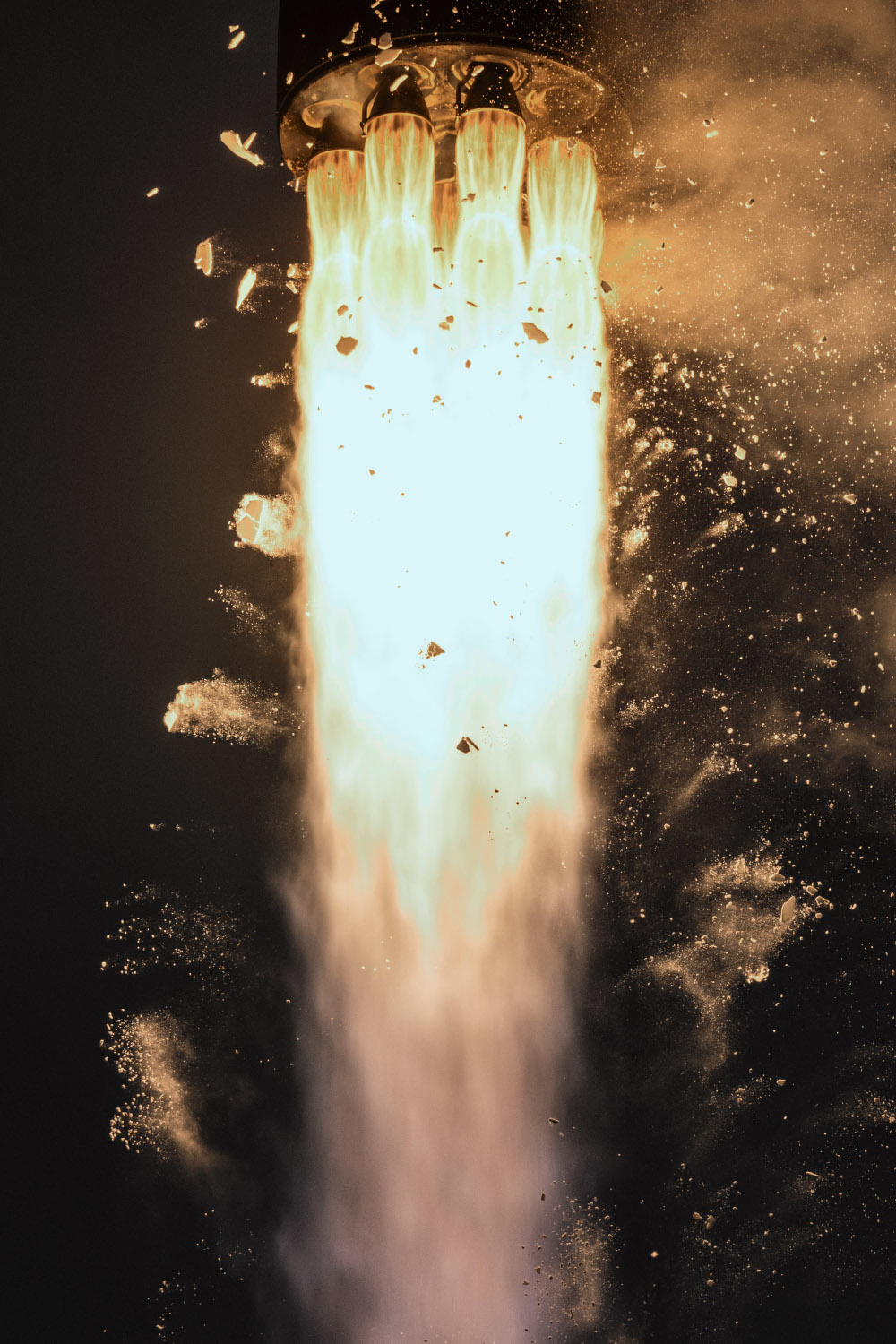
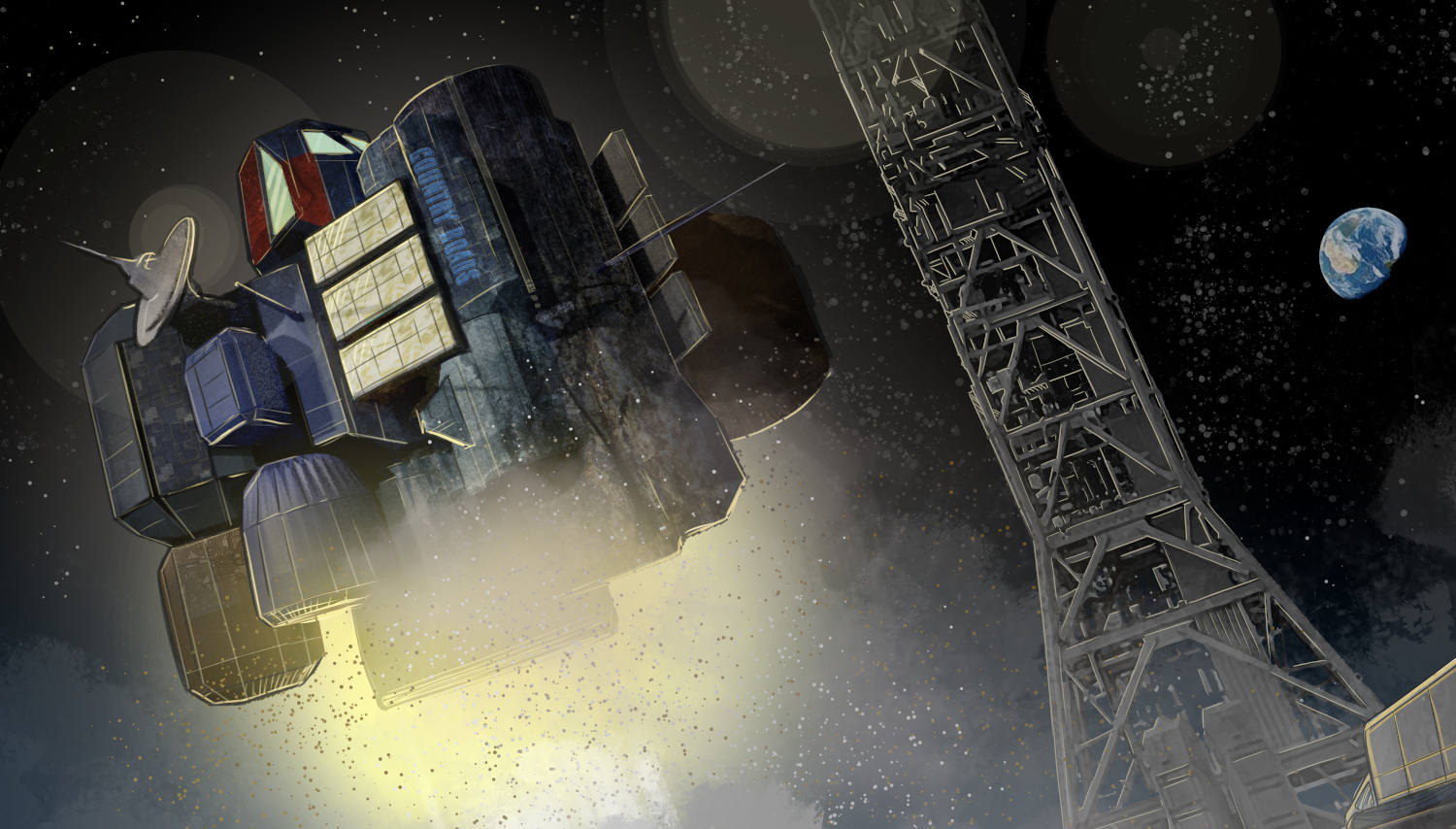
“The Country Roads stood upright on the pad, engine bells down, nose up, like all rockets since the beginning of the rocket age. But this ship was not tall and sleek like a rocket from Earth. It was squat and ungainly, with weird bumps wherever some interior feature required them. Solar panels and heat radiators were folded uncomfortably against its sides, and various antennas and dishes stuck out here and there. There was no need for it to be aerodynamic, as it would never enter an atmosphere.”
— from Food: Generation Mars, Book Four

One could argue that my choice of name for the translunar ferry that becomes a lifeboat, Country Roads, is a bit too on the nose. That’s fine. Sometimes on-the-nose is exactly what is needed.

(Savvy through-readers may also find a callback to my reference to lithopanspermia in the prologue to Water.)

Image: illustration by Luis Peres for Food: Generation Mars, Book Four

Music notes for Food

Do you remember the first time we see the Discovery One in 2001? It eases slowly onto the screen, as a melancholy orchestral piece plays (the Adagio from the Gayane Ballet Suite, by Aram Ilyich Khachaturian). The effect is to emphasize the foreignness of humans in deep space. I’ve always found the scene incredibly lonely.

https://www.youtube.com/watch?v=-jft1rvWQv0&t=1s

I had that scene in mind as I was writing of Nyla playing her cello over Radio Mars. But I wanted to deemphasize the loneliness and instead focus on finding strength through shared struggle.

Excerpt:
“The intimate and plaintive tone of the instrument, so similar to a human voice, sometimes made the children cry, but the tears brought them together. It was as if the music spoke to them of their fears and their suffering and told them that they were not alone, that other humans have suffered so, and knowing that helped them feel stronger.”
— from Food: Generation Mars, Book Four

I didn’t have any particular cello piece in mind for Nyla to play for Radio Mars, but my youngest has been practicing Vivaldi’s Cello Sonata in E Minor, Op. 14, No. 5, from Suzuki Book 5, lately. I think it’s a good fit.

https://www.youtube.com/watch?v=yoL5RYymIB4

Image: Victorian woman standing with cello. Public domain

Music notes for Food

Excerpt:
“Music filled the Country Roads. It was what used to be called surf music, with echo-y jangling guitars and voices in harmony singing about cars and waves.”
— from Food: Generation Mars, Book Four

Closeup of a Woody vehicle with surfboards on top. Image from Wikimedia Commons, by Damian Gadal. 

Licence: https://creativecommons.org/licenses/by/2.0/deed.en
California Surf Mobile

I like music that is out of time, music that sounds like it’s from an era that it is not, music that twists a genre into something else entirely. Here’s Sure as Spring, by La Luz, a modern band that I was listening to a lot when I wrote the first Radio Mars scene. It’s not exactly cars and waves, but it definitely rides that surf rock vibe, albeit in a more pensive way. And there are a couple lines in the chorus that fit elements of Part Three.

https://open.spotify.com/track/60JTA6msKu6uFlpvK8Tynn?si=431bb8b3b94b4ed9

Music notes for Food

Kyle Tran Myhre deserves a special place in my series of posts on #GenMarsFoodMusic.

I use the final verse of his piece called “Matches” as an epigraph for Food because it captures the essence of hopepunk.

It reminds me of the Carl Sagan quote: “In our obscurity, in all this vastness, there is no hint that help will come from elsewhere to save us from ourselves.” The obvious point being that we’d best get on with doing it ourselves.

It captures the hope-despite-hardship of my characters as they struggle with starvation and social collapse. It captures the hope-despite-hardship of all of us in our own struggles IRL.

It’s about self-reliance, except the self is collective. We succeed when we all take care of each other.

Kyle’s are the first and third verses here:
https://music.youtube.com/watch?v=6rphS6Ux-wY

To learn more about Kyle and his many activities, visit:

home

image: Kyle Tran Myhre performing. Taken by Adam Bubolz.

Music notes for Food

Many years ago, I went to Bolivia to help a friend with some field research. We stayed on a remote ranch in the Gran Chaco, an arid grassland in the southern part of the country. One night, as we were sitting and drinking beers with the rancher, he shared that he liked Mexican music. Being a young white American from the exact center of the country and only beginning to shed the cultural myopia which that entails, I found this eye-opening. It’s not like I didn’t know Latin America contained many countries, but I’d never really thought of them as being different from each other, you know? The idea that this rancher in southern Bolivia was a fan of Mexican music kind of slapped me and opened up my worldview in a most charming way.

I was thinking of this when I wrote a scene in which my Chinese protagonist shares Isan music from northern Thailand with his American friend.

Excerpt:
“Jun pulled out his tablet and touched it several times to cast music to the room’s sound system. Something like a guitar began noodling out an arrhythmic introductory riff that eventually settled into a repetitive pattern. This became more complex with each measure, building intensity until finally, drum and bass joined. Jun saw Keiron’s head begin to bop subtly up and down when the beat dropped.”
— from Food: Generation Mars, Book Four

Pretty sure this was the track I described.

https://www.youtube.com/watch?v=F2VXJ-Gyle4

https://open.spotify.com/track/4KKOeMWgKcHEle0chfj8hd?si=46c975d01b5548c6

Music notes for Food

There are many musical references in my latest book. Such references are a challenge for an indie author. I have to be careful to not cross any fair use boundaries: artists and titles and bare hints of lyrics only. So I thought it might be fun to elaborate on some of them here.

Food: Generation Mars, Book Four now available

Food: Generation Mars, Book Four has landed!

https://www.amazon.com/Food-Generation-Mars-Book-Four/dp/1733731083

Air, shelter, water, food: that was the plan. Following the success of the first book, Scratching the Surface, I would write four more. Each book would be a chapter book for advanced early readers and would address one of these fundamental elements of survival with a little vignette in which my protagonists deal with a crisis and, through their actions, teach the reader a little about science.

Things did not go to plan. I had too much to say for such constraints to hold. You might say my primary alignment failed and I broke containment.

Now, here we are at Food, the last planned book, and it’s a whopper. Believe me when I tell you: there is a lot in this book. I’m not even sure it’s a kids book. Categorizing it has been a challenge. Let’s say it’s upper middle grade/early young adult. Actually, no, let’s abandon such synthetic labeling and say it’s for anyone 11 to 100 who enjoys a rousing adventure with pathos and science and suspense and humor and failure and triumph. (For kids younger than that, parents may want to pre-read.)

What’s it like to release the last book in a series? I feel… wistful. A little. My own kids are growing up, just like my characters, and it’s hard to let eras go. But that’s what parents and authors must do. So–*sniffle*, *deep breath*–here it is, the last book of the Generation Mars series.

Well, sort of. The thing about eras is that there is always another. Food completes the planned survival element framework and ends in a satisfying place for the characters. But it also leaves the situation on Mars and Earth in a mess. That was on purpose. You should always leave a mess for the next series to clean up…

Crafting Generation Mars 16 (illustration)

Share examples of your ideas with your illustrator. Make mockups: physical, existing imagery, AI (if, like me, you can’t draw).

Share relevant excerpts from your manuscript with them. Share the whole manuscript if they want it. You have to give them plenty to work with.

Aside: Stop worrying about somebody stealing your work. The likelihood of that happening is vanishingly small. You’re never going to move forward if you worry about that.

images: 1) a physical mockup of the ice mine in Book Three, 2) a mockup map of the area around Dawn using public domain satellite imagery of Mars, 3) an AI mockup of Nour, a character from Book Three.

Crafting Generation Mars 14 (illustration)

As the author, it’s important to own the copyright on your illustrations. You want to be able to remix them yourself and use them for future purposes (promos, merch, whatever), without having to ask permission.

Specify this in the contract. This will cost a bit more, but it’s worth it.

Also allow the artist to retain the right to display them in their portfolio. This helps them and can be good for you as well if they have social media reach.

image: Photograph of Greg Wilson taken by Ian Tilton. It was used as artwork for the Credit To the Edit album compilation by Greg Wilson released on Tirk Records. https://commons.wikimedia.org/wiki/File:Greg_Wilson_C2TE.jpg https://creativecommons.org/licenses/by-sa/3.0/deed.en